
The Internal Conflict of Fear and Madness
All Quiet on the Western FrontThe psychological battle within the soldiers as they face the constant threat of death, leading to shell shock, madness, and the struggle to hold on to sanity.
increasing Bearing strength in each event
 decreasing
Bearing strength in each eventdecreasingThe Fear in the Dugout
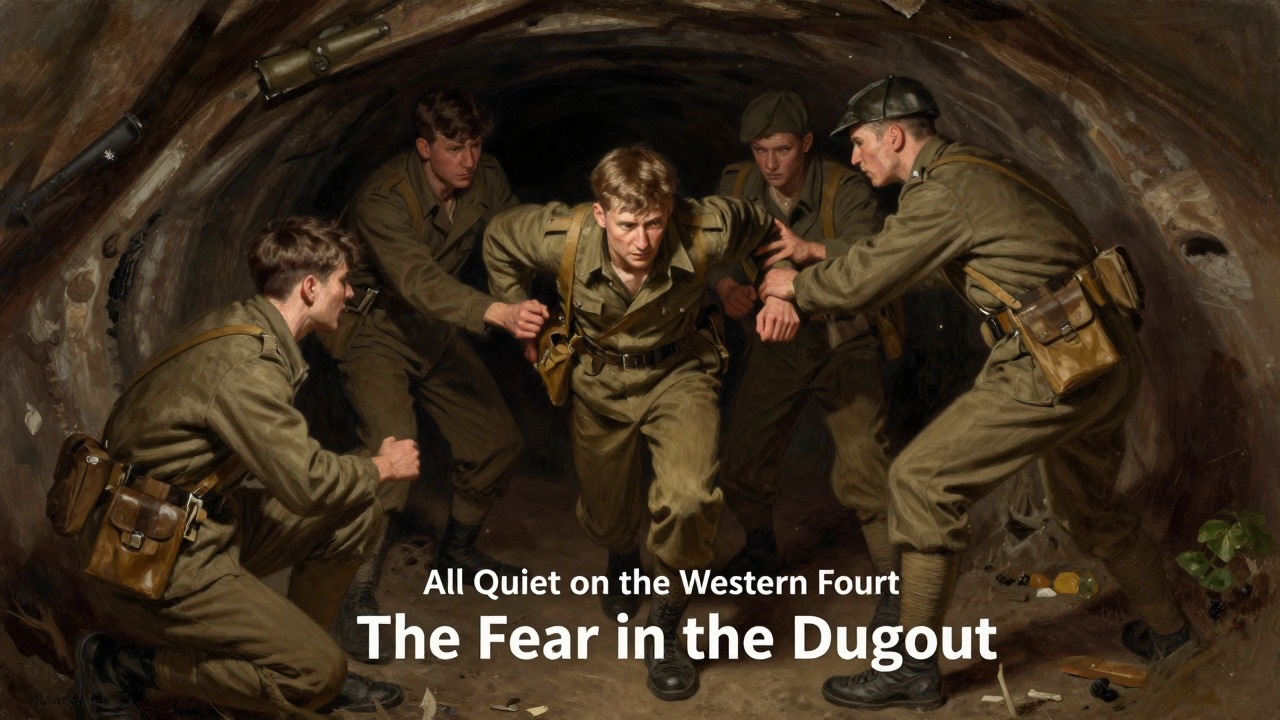
The Fear in the Dugout
The Claustrophobia
The men are trapped in the dugout for days. The shelling is relentless. The recruits begin to break down, suffering from claustrophobia and panic.
The Madness
One recruit tries to run out. Paul and Kat have to restrain him by force. Another recruit goes insane, butting his head against the wall.
The Struggle to Control
The men must fight their own fear to survive. The instinct to flee is powerful, but it means death. The internal conflict is as fierce as the external one.
The Patrol and the Panic
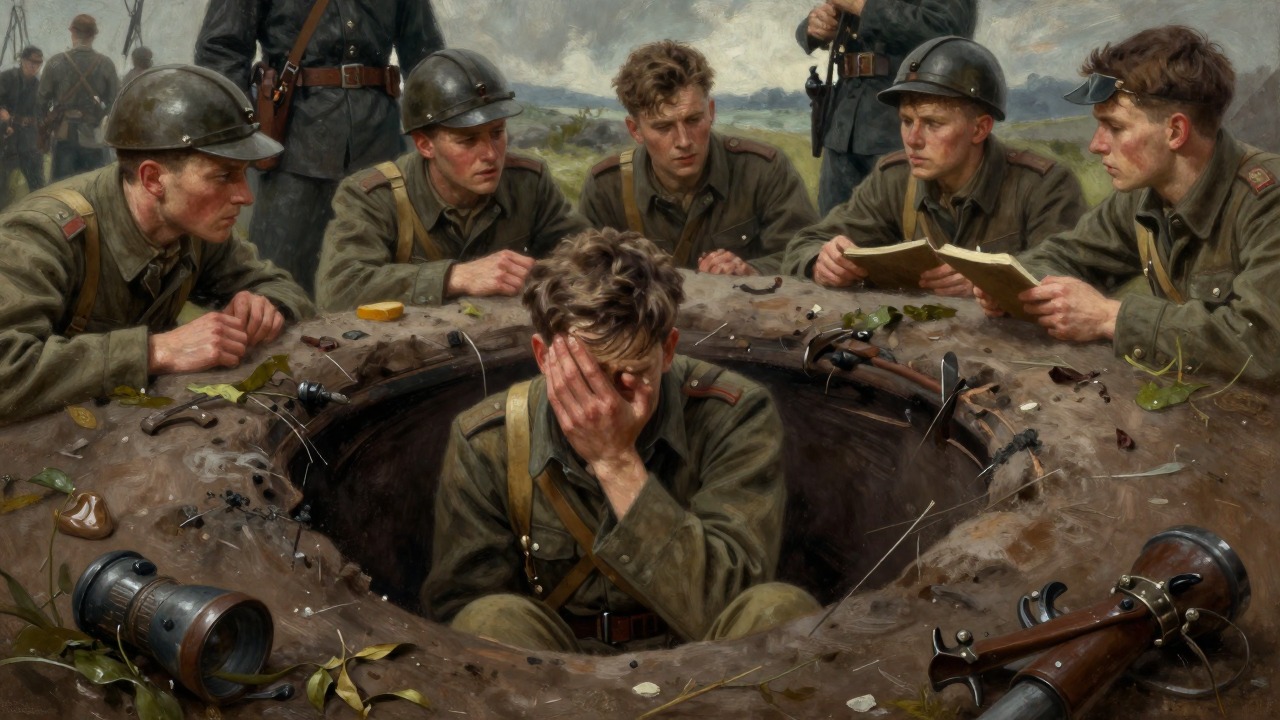
The Patrol and the Panic
The Return to the Front
After his leave, Paul is sent on a patrol. He is alone in a shell-hole and is overcome with fear. He cannot move, his body is paralyzed.
The Voices of Comrades
He hears the voices of his comrades in the trench behind him. The sound of Kat and Kropp snaps him out of his panic. He crawls forward again.
The Victory over Fear
The voices of his comrades are more powerful than his fear. The bond of the group gives him the strength to continue. The internal conflict is won, but only temporarily.
Berger's Madness
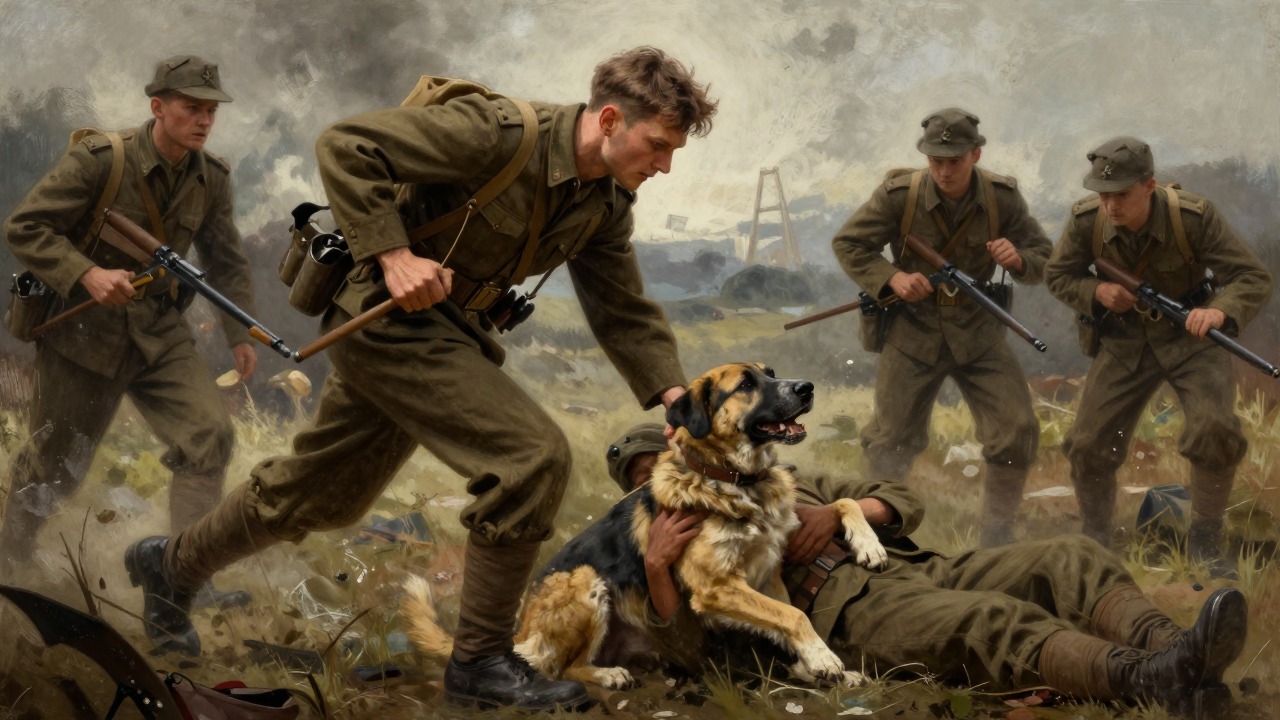
Berger's Madness
The Front-line Madness
Berger, a powerful soldier, becomes obsessed with a wounded messenger dog. He insists on going to fetch it, despite the danger. His comrades cannot stop him.
The Reckless Act
Berger runs into the barrage and is wounded. He is carried away, but his act is clearly insane. The front-line madness has claimed him.
The Explanation
The stress of the war breaks men in different ways. Some run, some dig, some become reckless. The internal conflict can lead to madness, a common escape.
During the prolonged bombardment before the offensive
When Paul returns from leave and goes on patrol
During the summer of 1918
